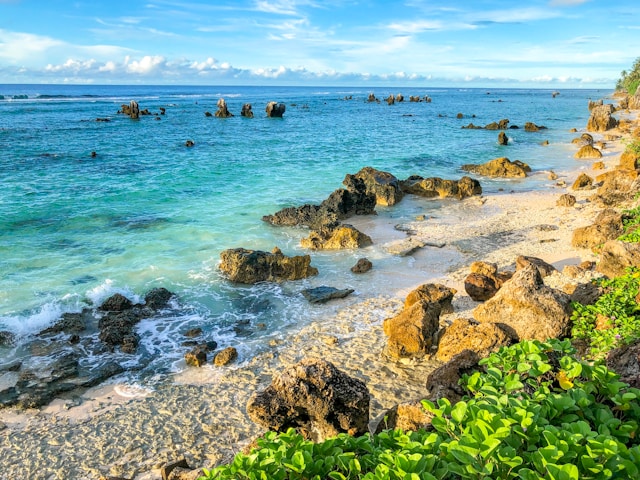
Imagine a tiny island nation, once hailed as one of the wealthiest places on Earth, where citizens enjoyed tax-free living, free services, and luxuries like imported sports cars despite having few roads. This was Nauru, a small Pacific island country whose dramatic rise and devastating fall offer one of modern history’s starkest cautionary tales about wealth, mismanagement, and environmental destruction.
The Genesis of Wealth: Phosphate Discovery and Colonial Exploitation
Nauru’s story begins with its ancient inhabitants, Micronesian and Polynesian peoples, who settled the island around 3,000 years ago, developing a self-sufficient society organized into 12 matrilineal clans. For millennia, they lived in harmony with their environment, relying on fishing, coconut, and pandanus cultivation. European contact began when British Captain John Fearn named it “Pleasant Island” after his ship, the Hunter, discovered the island on November 8, 1798.
However, European beachcombers disrupted this peace in the 19th century by introducing firearms and alcohol, leading to a devastating ten-year civil war (1878–1888) that reduced the population from approximately 1,400 to around 900. Germany intervened, annexing Nauru in 1888 and incorporating it into the German New Guinea Protectorate.
The discovery of high-grade phosphate deposits in 1900 by prospector Albert Ellis would forever change Nauru. Mining began in 1906 under the Pacific Phosphate Company. Phosphate, prized globally as a fertilizer, quickly became Nauru’s chief export, primarily used to subsidize agriculture in Australia, New Zealand, and the United Kingdom. During this colonial period, Nauruan landowners received only modest royalties well below world prices, while foreign companies extracted immense wealth.
The Golden Age: Independence and Unprecedented Prosperity
After World War I, Nauru became a League of Nations mandate administered by Australia, Britain, and New Zealand, with the British Phosphate Commission (BPC) assuming control of mining operations. World War II brought further trauma, with Japanese occupation leading to brutal repression and the forced deportation of over 1,200 Nauruans to Chuuk, where more than 400 perished.
In 1968, Nauru finally achieved independence, taking control of its destiny and, crucially, its phosphate mines. This marked the beginning of an astonishing era. By 1975, Nauru’s per capita GDP had reached approximately $50,000 (Australian dollars), making it the second-highest in the world, surpassed only by Saudi Arabia.
Life during these “golden years” was extraordinary. The government levied no taxes, providing free education, healthcare, and comfortable public-sector jobs. Nauruans enjoyed modern housing, imported goods, and leisure pursuits without the burden of taxation or resource scarcity. Stories from this period describe lavish spending and extravagant purchases that reflected the island’s newfound wealth and prosperity.
Leaders established the Nauru Phosphate Royalties Trust (NPRT) to invest mining proceeds for the future, which peaked at approximately A$1-1.3 billion in assets, including notable properties such as the Nauru House in Melbourne.

The Unraveling: Environmental Catastrophe and Economic Collapse
Beneath the veneer of prosperity, Nauru’s future was being literally stripped away. The high-grade phosphate lay just beneath the surface of the island’s central plateau, and mining meant removing soil, vegetation, and limestone. For over a century, these operations carved up the island with little regard for restoration. Strip mining had reduced approximately 80% of Nauru’s land to a jagged, barren “moonscape” of upturned coral pinnacles by the time the phosphate was largely depleted in the 1990s. The once-lush tropical interior was rendered virtually uninhabitable, making agriculture almost impossible. This has been described as “one of the world’s worst environmental disasters.”
Despite phosphate depletion, the Nauruan government was slow to curb spending, leading to ballooning budget deficits. The NPRT, meant to secure the nation’s future, was plagued by mismanagement, lack of expertise, and questionable investments. These included ventures like Nauru’s own airline and shipping line, which incurred high costs, and a costly West End musical about Leonardo da Vinci’s life that failed spectacularly, with the government investing £2 million in “Leonardo the Musical: A Portrait of Love,” which closed after just five weeks.
By 2004, the NPRT’s value had plummeted from A$1.3 billion in 1990 to only A$0.3 billion, representing a catastrophic loss of national wealth. Nauru plunged deep into debt, defaulting on loans by 2002. Creditors took control of many of the nation’s assets, including the Nauru House in Melbourne, and impounded the national airline’s aircraft. The central bank effectively went bankrupt, and basic services teetered on the brink of collapse.
Political Turmoil and Desperate Measures
The financial crisis triggered a governance crisis. Nauru’s Parliament experienced intense factionalism, with frequent votes of no-confidence and shifting alliances. Between 1989 and 2003, Nauru underwent 17 changes in administration, resulting in a pattern of political instability.
Desperate for revenue, Nauru turned to controversial measures in the 1990s. It reinvented itself as an offshore finance haven, selling banking licenses with minimal oversight. This turned Nauru into a destination for illicit money, with approximately 400 foreign “shell banks” registered on the island. It also sold “economic citizenship” (passports for cash) with minimal background checks. These activities briefly injected funds but led to international criticism for money laundering, forcing Nauru to dismantle the sector by 2004.
A controversial lifeline emerged with the establishment of Australian-funded detention camps for asylum seekers. Starting in 2001, and especially after 2012, hosting Australia’s offshore refugee processing center became a major source of income and jobs.
Social and Cultural Impacts
The rapid fluctuations in Nauru’s fortunes had a profound impact on its society, culture, and health. The shift from a self-sufficient lifestyle to a Westernized consumer lifestyle brought new health challenges. Nauru now faces one of the world’s worst public health profiles, with the World Health Organization estimating that 94.5% of Nauruans are overweight or obese, and the International Diabetes Federation identifying 31% of Nauruans as diabetic, with rates as high as 45% among individuals aged 55 to 64 years.
Education and public services, which flourished during the boom, deteriorated during the collapse. While foreign aid has helped rebuilding efforts, restoring quality services remains challenging.
The dramatic economic reversal has significantly impacted national morale, with many educated Nauruans emigrating in search of opportunities. While cultural traditions such as canoe racing and local music have endured, a palpable sense of loss remains among the population.
A Cautionary Tale and an Uncertain Future
Nauru’s history stands as a potent symbol of the “resource curse,” where vast natural resource wealth leads to economic distortion, environmental destruction, and, ultimately, impoverishment. The story highlights critical lessons about the importance of prudent governance, economic diversification, and rigorous environmental stewardship.
Today, Nauru remains economically precarious, heavily dependent on external aid and a limited revival of phosphate mining. Rehabilitating the extensively damaged environment is proving exceptionally challenging and costly, with the Nauru Rehabilitation Corporation estimating complete restoration at $US1.014 billion over a planned 100-year timeline. Climate change poses additional threats, with rising sea levels and storm surges threatening the remaining inhabited coastal areas.
Nauru’s journey serves as a powerful reminder that natural resource wealth, if mismanaged and extracted unsustainably, can impoverish a nation and leave enduring scars on both the land and its people. The resilient people of Nauru continue to grapple with the aftermath of these tumultuous decades, searching for a more sustainable path forward on their fragile island home.
References
- https://en.wikipedia.org/wiki/Nauru
- https://www.youtube.com/watch?v=4P-RvlYGP3U
- https://2009-2017.state.gov/outofdate/bgn/nauru/74212.htm
- https://en.wikipedia.org/wiki/Nauruan_Civil_War
- https://www.wikiwand.com/en/articles/Nauruan_Civil_War
- https://smartencyclopedia.org/1900/04/15/prospector-albert-fuller-ellis-discovers-rich-phosphate-deposits-in-nauru-and-banaba-island/
- https://nauru-data.sprep.org/index.php/system/files/Pollock_NauruansDuringWW2.pdf
- https://islandtimes.org/nauru-riches-to-rags-to-riches/
- https://en.wikipedia.org/wiki/Nauru_Phosphate_Royalties_Trust
- https://www.adb.org/sites/default/files/linked-documents/45032-001-ea.pdf
- https://en.wikipedia.org/wiki/Leonardo_the_Musical:_A_Portrait_of_Love
- https://www.mentalfloss.com/leonardo-da-vinci-musical-financed-by-guano
- https://showvouchers.com/musical/166/leonardo-the-musical-a-portrait-of-love
- https://unfccc.int/files/cooperation_support/financial_mechanism/long-term_finance/application/pdf/nauru_case_study_pccfaf_final_report.pdf
- https://en.wikipedia.org/wiki/Politics_of_Nauru
- https://home.treasury.gov/system/files/246/js1941.pdf
- https://en.wikipedia.org/wiki/Obesity_in_Nauru
- https://www.rnz.co.nz/news/pacific/397506/nauru-moves-ahead-with-land-rehabilitation
- https://ppl-ai-file-upload.s3.amazonaws.com/web/direct-files/attachments/229769/331ef752-dc28-4dad-b71e-4f0667291ad8/paste.txt
- https://graphsearch.epfl.ch/concept/1762785
- https://www.mssanz.org.au/modsim05/papers/cox_j.pdf
- https://www.ynetnews.com/business/article/hjcxajbyt
- https://www.youtube.com/watch?v=PqSfiMc8egU
- https://www.reddit.com/r/cars/comments/1ktchqb/the_lamborghini_of_naurus_police_chief/
- https://www.independent.co.uk/news/uk/fertiliser-island-scents-musical-success-first-night-leonardo-1489451.html
- https://en.wikipedia.org/wiki/History_of_Nauru
- https://www.unicef.org/pacificislands/media/1161/file/Situation-Analysis-of-Children-Nauru.pdf
- https://en.wikipedia.org/wiki/President_of_Nauru
- https://nauru-data.sprep.org/system/files/Nauru_2011_Census_Report_FINAL%20(3).pdf
- https://minio.uninfo.org/uninfo-production-main/f4a8c115-7b2c-480e-a9d9-e6fedac4d635_NAUCCA2024.pdf
Leave a Reply